

Subscribe: Apple Podcast | Email | Spotify | Stitcher
Medically reviewed by Bahee Van de Bor, Registered Paediatric Dietitian and former specialist dietitian at Great Ormond Street Hospital, with over 20 years of clinical experience in paediatric digestive health.
What Is the Toddler Poop Chart?
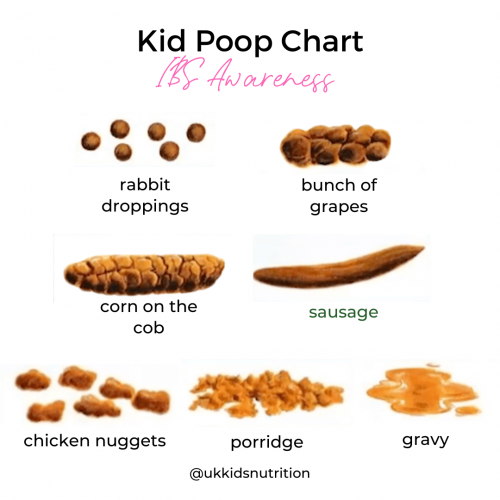
The toddler poop chart, also known as the Bristol Stool Chart, is a tool used by doctors and dietitians to describe stool consistency.
It divides stools into seven types, ranging from hard pellet-like stools (Type 1), which often indicate constipation, to watery stools (Type 7), which may suggest diarrhoea.
In children, the chart helps parents and clinicians identify patterns in digestion and understand whether symptoms may be linked to constipation, loose stools, or functional gut disorders such as IBS.
Parents often arrive at this page after searching for a “toddler poop chart.”
The chart can help understand toddler stool patterns. I use it regularly in my Happy Belly Clinic because it gives parents and clinicians a simple way to describe stool patterns.
But the chart is only the starting point.
If you’re here because your child’s stools don’t look right, and you’ve already tried to fix it…
- You’ve increased fibre
- You’ve cut foods like dairy
- You’ve been told everything is “normal”
And it’s still not improving.
This is where many families get stuck.
Because the issue is often not what you’re doing.
It’s understanding the pattern behind the symptoms first.
Without that, even the right changes can feel like they’re not working.
In my clinic, the pattern behind the stool type often matters more than the chart itself. Many families I see have already been told that their child’s blood tests and stool tests are normal, yet daily life is still disrupted by tummy pain, constipation or frequent loose stools.
Many parents arrive here after searching for answers like ‘Why does my child still have loose stools when all the tests are normal?’
As a specialist paediatric dietitian with more than 20 years of experience, including 12 years at Great Ormond Street Hospital, my role is to look beyond the chart and understand what may be driving the symptoms.
For example, a child with frequent Type 6 stools may not have an infection at all. Instead, the pattern may reflect factors such as gut motility, fibre balance, carbohydrate digestion or gut sensitivity.
Bristol Stool Chart for Toddlers and Children
The Bristol Stool Chart is commonly used by clinicians to describe stool consistency in children and adults.
Although the chart was originally developed for adults, it is widely used in paediatric gastroenterology because it provides a simple way to discuss stool patterns in children and track changes over time.
Inmy clinic, stool types can give useful clues about gut transit time, or how quickly food moves through the digestive system.
If the chart helped but the pattern keeps changing
Sometimes the chart gives you a name for what you’re seeing, but it doesn’t explain why it keeps happening.
If your child’s stools shift between Types 1 and 2 one week, then Type 6 the next… or if they’ve been stuck at Type 6 for months despite everything you’ve tried… the chart alone won’t give you the answer.
That pattern, the one that doesn’t stay in one place, is often the most important clinical signal.
It usually means the gut is reacting to something. And until that something is identified, symptoms tend to cycle regardless of what you change.
If this sounds familiar, scroll down to understand why symptoms often persist even when you’re doing everything right.
Bristol Stool Chart Types in Children
Type 1 & Type 2: Indicators of Constipation
Type 1 – Hard separate lumps (“rabbit droppings”)
These small, hard stools usually indicate that the stool has spent too long in the large intestine. During this time, the colon absorbs more and more water, making the stool dry and difficult to pass.
Children passing Type 1 stools often experience straining or discomfort.
Type 2 – Lumpy sausage-shaped stool
This suggests a similar pattern of slow transit through the bowel. In children, this may sometimes be associated with a mismatch between fibre and fluid intake or reduced gut motility due to withholding behaviours.
Type 3 & Type 4: The Healthy Range
Type 3 – Sausage-shaped with cracks
This is generally considered within the normal range, although it sits on the firmer end of the spectrum.
Type 4 – Smooth and soft
This is often considered the ideal stool consistency. It usually indicates that food is moving through the digestive system at an appropriate pace and that the gut is balancing water and fibre effectively.
Type 5, 6 & 7: Looser Stool Patterns
Type 5 – Soft blobs
These stools are softer and may indicate slightly faster gut transit. In children, this can sometimes occur when food is moving through the colon a little too quickly for water to be fully absorbed.
Type 6 – Mushy or ragged stool
This is the pattern many parents describe when they talk about frequent loose stools.
Rather than infection, this stool type can sometimes reflect:
- rapid gut transit
- excess fermentable carbohydrates
- gut sensitivity (visceral hypersensitivity)
Parents often describe this stool consistency as “thick custard”, “porridge-like”, or “whipped ice cream.”
Type 7 – Watery stool
This is entirely liquid stool and may occur during an acute infection. If watery stools persist beyond several weeks, clinicians may consider conditions such as functional diarrhoea or other causes of malabsorption.
Why stool patterns matter
Looking at stool consistency over time can provide important clues about how the digestive system is functioning and help clinicians understand toddler stool patterns.
For example:
- Persistent Type 1 stools may indicate constipation
- Fluctuating stools may suggest gut sensitivity
- Ongoing Type 6 stools may reflect rapid gut transit
Understanding these patterns helps clinicians decide whether symptoms are more likely to relate to constipation, diarrhoea, IBS or other functional gut disorders.
If your child’s stools are consistently loose but their medical tests have come back normal, read my deep dive on Why Loose Stools Persist When Tests are Normal.
Why things may not have improved yet
Many of the families I work with have already tried making changes before they reach this point.
They’ve often:
- increased fibre
- removed certain foods
- tried probiotics or supplements
- used laxatives
But symptoms continue.
Not because they’ve done the wrong things.
But because the underlying gut pattern hasn’t been clearly identified first.
For example:
- Loose stools may actually be overflow from constipation
- Fibre added at the wrong stage can worsen symptoms
- Removing foods without a clear plan can reduce diet variety without improving symptoms
Until the pattern is understood, symptoms often continue to cycle, even with the best intentions.
This is where a structured approach changes things.
If your child’s stool pattern keeps shifting, and you’ve already tried increasing fibre, removing foods, or waiting it out, you’re not doing anything wrong. You’re missing a map.
In my clinical programme, the Happy Belly Club®, I work with families through a structured 12-week process to identify what’s actually driving the pattern, stabilise the gut, and build back toward normal daily life.
If you’d like to understand whether this approach is right for your child, you can book a free 15-minute Discovery Call. No pressure, just a clear conversation about what’s going on and whether I can help.
How Stool Types Relate to Digestive Patterns in Children
The table below summarises how the different stool types on the Bristol Stool Chart are commonly interpreted in children.
How Bristol Stool Chart Types Relate to Constipation and Diarrhoea in Children
| Stool Type (Bristol Chart) | Typical Digestive Pattern | What Parents May Notice |
|---|---|---|
| Type 1–3 | Constipation | Pain, withholding |
| Type 4 | Healthy stool pattern | Normal |
| Type 5–6 | Faster gut transit | Ongoing loose stools |
| Type 7 | Diarrhoea | Persistent symptoms |
Toddler Diarrhoea: The “Whipped” Stool Pattern
“Toddler diarrhoea” is a term often used when young children pass frequent loose stools despite otherwise being healthy and growing well. This pattern most commonly affects children between one and five years of age.
Parents often notice that stools are unformed and may occur several times throughout the day. In many cases, the first stool of the morning may be slightly more formed, with stools becoming progressively looser as the day continues.
On the child and toddler Bristol Stool Chart, these stools are usually described as Type 5 or Type 6.
However, parents rarely use numbers when describing child and toddler stool patterns. In clinic I often hear descriptions such as:
- “Porridge-like”
- “Fluffy”
- “thick custard”
- “whipped ice cream”
These descriptions are actually very helpful because they can provide clues about how the gut is functioning.
Why this child and toddler stool pattern happens
This type of stool consistency often occurs when food moves through the digestive system more quickly than usual. When transit is faster, the colon has less time to absorb water from the stool, resulting in softer or looser stools.
Several factors can contribute to this pattern in young children.
One common mechanism is osmotic load. Certain carbohydrates, particularly natural sugars found in fruit or fruit juices, can draw extra water into the intestine during digestion.
Other contributing factors may include:
- rapid gut transit
- a mismatch between fibre intake, fluid intake and gut motility
- large amounts of fruit juice
- temporary gut sensitivity after illness
Importantly, children with this pattern usually continue to grow and develop normally, and routine medical tests are often completely normal.
When to look more closely
Although toddler diarrhoea can be a common and sometimes temporary pattern, it may be helpful to review diet and symptoms if:
- Loose stools continue for more than four to six weeks
- The frequency or urgency interferes with nursery, school or potty training
- There is frequent tummy discomfort or excessive wind
- Stool patterns fluctuate between constipation and loose stools
In these situations, looking more closely at dietary patterns, fibre balance and gut motility can help identify the factors that may be contributing to ongoing symptoms.
If loose stools seem to alternate with constipation, or if accidents have started alongside what looks like diarrhoea, it is worth understanding the signs of overflow diarrhoea in children before making any dietary changes.

The Role of Fibre in Stool Consistency
Fibre plays an important role in regulating stool consistency and gut transit.
Different types of fibre behave very differently inside the digestive system. Some fibres help stools retain water and remain soft, while others add bulk and structure to the stool as it moves through the colon.
When the balance is right, stools are usually closer to Type 3 or Type 4 on the Bristol Stool Chart, which indicates a comfortable and predictable bowel pattern.
However, when fibre intake is not well matched to a child’s gut rhythm, stools can shift in either direction.
For example:
- Too little fibre may contribute to hard stools or constipation.
- Certain fibres in excess may increase stool volume and speed up transit, which can worsen loose stools in some children.
For children experiencing frequent Type 5 or Type 6 stools, increasing fibre indiscriminately does not always improve symptoms. In some cases, it can make the stool pattern more unpredictable.
For this reason, dietary adjustments are usually made gradually and in a structured way, taking into account the child’s overall diet, fluid intake and stool pattern.
Understanding which type of fibre is helpful for a particular stool pattern is often more important than simply increasing the total amount.

Stool Colour in Children: What Is Normal?
Parents are often concerned when they notice a sudden change in their child’s stool colour. You might search for a toddler stool colour chart when seeing something unusual in the nappy or toilet.
In most cases, changes in stool colour are simply a reflection of diet or digestion, and many variations are completely normal.
The typical brown colour of stool comes from bile produced by the liver. As food travels through the digestive system, bile pigments are gradually broken down, changing from green to yellow and finally to brown.
Looking at both the colour and the consistency of the stool usually provides the most useful clues about what is happening in the gut.
Below are some of the most common colour patterns parents notice.
Green Stools
Green stools are very common in babies and young children and are usually not a cause for concern.
They often occur when food moves through the gut slightly faster than usual (rapid transit), meaning the green bile has not had time to turn fully brown.
Common reasons include:
- eating large amounts of green vegetables
- iron supplements
- certain food colourings
- rapid gut transit
Babies who switch to extensively hydrolysed or amino acid-based formulas for cow’s milk protein allergy often pass dark green stools. This is a normal effect of the formula and does not indicate a problem.
Yellow or Mustard-Coloured Stools
Yellow or mustard-coloured stools are normal in breastfed infants, but they can also occur in toddlers when digestion is moving slightly faster than usual.
Occasionally, yellow stools may appear if the stool contains more fat than usual.
If stools look greasy, oily, or unusually foul-smelling, and this happens repeatedly alongside poor growth or ongoing diarrhoea, a healthcare professional should review the symptoms to rule out problems with fat absorption.
Red Stools
Seeing red in the stool can understandably be alarming. Fortunately, the most common cause is food rather than blood.
Foods that commonly cause red stools include:
- beetroot
- tomato-based sauces
- red food colouring
Sometimes, a small streak of bright red blood may appear on the surface of a hard stool. This is often caused by a tiny tear in the skin around the anus (anal fissure) after passing a constipated stool.
If blood appears repeatedly, or if it is mixed into loose stools and accompanied by abdominal pain or weight loss, medical advice should be sought.
Dark or Black Stools
Certain foods and supplements can make stools appear dark or black, including:
- blueberries
- liquorice
- foods containing dark food colouring
- iron supplements
However, if stools appear very black and tar-like, particularly without a clear dietary explanation, medical advice should be sought as this can occasionally indicate bleeding higher in the digestive tract.
Pale or White Stools
Pale, clay-coloured or white stools are uncommon and should always be assessed by a doctor.
This colour change can indicate that bile is not reaching the intestine properly, which may suggest a problem with bile flow from the liver or gallbladder.
Although rare, this type of stool colour should not be ignored.
What If My Child’s Tests Are Normal but Symptoms Continue?
Many families arrive in my clinic after months, and sometimes years, of searching for answers about chronic loose stools despite normal tests.
They have often already had blood tests, stool tests, or coeliac screening. The results come back normal, yet their child is still experiencing symptoms such as:
- ongoing loose stools
- constipation that keeps returning
- tummy pain that disrupts school or sleep
- unpredictable bowel patterns
When this happens, parents are sometimes told that there is “nothing wrong.”
In reality, this usually means that the gut looks healthy structurally, but the way it functions is out of sync.
“All the Tests Are Normal… So Why Does My Child Still Have Gut Symptoms?”
This is one of the most common situations families describe when they first contact me.
Blood tests, stool tests and coeliac screening may all come back normal, yet a child is still experiencing ongoing symptoms such as loose stools, constipation or tummy pain.
In many cases, this happens because routine tests are designed to detect structural disease, such as inflammation or infection. They are not designed to measure how the gut is functioning day to day.
When symptoms continue despite normal results, clinicians begin to look more closely at patterns of digestion, including gut motility, dietary triggers, fibre balance and gut sensitivity.
Understanding these patterns often provides the missing piece that explains why symptoms have persisted even when tests appear reassuring.
If your child’s symptoms are still ongoing despite normal tests
And you’re finding that:
- nothing quite works consistently
- Symptoms keep coming back
- Or you’ve been told to “wait it out”
This is usually where a more structured approach is needed.
In my clinical programme, the Happy Belly Club®, I work with families to:
- identify what is actually driving their child’s symptoms
- Stabilise the gut before making further changes
- and build back towards normal eating and daily life
So you’re not constantly guessing what to try next.
No pressure, just a clear explanation of what may be going on.
Understanding Functional Gut Disorders in Children (Rome IV Criteria)
When routine investigations such as blood tests or stool samples come back normal, clinicians often refer to the Rome IV criteria. These internationally recognised guidelines help doctors diagnose functional gut disorders in children.
A functional disorder means the structure of the digestive system is healthy, but the way the gut functions can become disrupted.
This may involve changes in:
- gut motility (how quickly food moves through the digestive system)
- gut sensitivity (how strongly the gut responds to digestion or stretching)
- communication between the gut and the nervous system
These changes can lead to very real symptoms even when medical tests appear normal.
Several common childhood digestive conditions fall into this category.
Common Functional Gut Disorders in Children
In paediatric gastroenterology, persistent digestive symptoms often fall into a group known as functional gut disorders.
Common examples include:
- functional constipation
- functional diarrhoea (often called toddler diarrhoea)
- irritable bowel syndrome (IBS)
- functional abdominal pain
These conditions are diagnosed using the Rome IV clinical criteria, which focus on patterns of symptoms rather than laboratory abnormalities.
Functional Constipation
Functional constipation is one of the most common digestive conditions seen in children.
The Rome IV criteria include features such as:
- fewer than two bowel movements per week
- excessive stool withholding
- painful or hard bowel movements
- passing very large stools
In many cases, constipation develops when children begin to avoid the toilet because passing stools has previously been uncomfortable.
Functional Diarrhoea (Often Called Toddler Diarrhoea)
Functional diarrhoea typically presents as frequent loose stools that persist for more than four weeks.
Toddlers and children with this pattern often:
- pass loose stools several times per day
- have stools that become looser as the day progresses
- continue to grow and thrive normally
Although the stools can look worrying, this pattern often reflects rapid gut transit or dietary factors affecting water balance in the gut.
Irritable Bowel Syndrome (IBS) in Children
Children with irritable bowel syndrome (IBS) often experience a combination of digestive symptoms rather than a single problem.
Common symptoms may include:
- recurrent lower abdominal pain
- diarrhoea with urgency
- constipation or a feeling of incomplete bowel emptying
- stool accidents or soiling
- bloating or abdominal distension
- excess wind or gas
These symptoms can fluctuate over time. Some children experience alternating constipation and loose stools.
Parents often notice that symptoms worsen during periods of stress, illness or dietary changes.
In younger children, IBS can sometimes present in less obvious ways. A child may become more irritable, struggle with potty training, or appear withdrawn when their stomach hurts.
How IBS Is Diagnosed in Children (Rome IV Criteria)
Doctors diagnose IBS using internationally recognised guidelines known as the Rome IV criteria.
In children, IBS is typically considered when:
- Abdominal pain occurs at least four days per month
- The pain is associated with bowel movements
- There is a change in stool frequency or stool consistency
Importantly, in children with constipation, the abdominal pain does not fully resolve when constipation improves.
IBS is diagnosed only after an appropriate medical assessment has ruled out other conditions such as coeliac disease, inflammatory bowel disease, or infection.
If your child also struggles with constipation, you may find it helpful to read How to Help Constipation in Babies and Toddlers, where I explain practical steps to support bowel movements safely.
Why these definitions matter
Understanding which pattern best fits a child’s symptoms helps clinicians move beyond reassurance alone and towards a more structured approach.
By looking at stool patterns, dietary intake, gut motility and sensitivity, it becomes possible to identify the factors that may be contributing to ongoing digestive symptoms.
This is often the first step toward improving comfort, stool regularity and confidence around eating, and it is the approach I use with families in my clinic.
Why a Stool Chart Alone Isn’t Enough
Tools such as the Bristol Stool Chart can help us understand stool consistency, but they only provide one piece of the puzzle.
To understand why symptoms are happening, clinicians also look at factors such as:
- gut transit speed
- dietary patterns
- fibre balance
- osmotic load from certain carbohydrates
- the gut–brain connection and visceral sensitivity
When these elements are assessed together, it becomes much easier to understand why a child’s symptoms are occurring and how to improve them.
Moving From Guesswork to a Structured Plan
In my clinical practice, I use a structured framework called the Happy Belly Formula:
Identify → Restore → Thrive
First, we identify the pattern behind the symptoms.
Then we implement targeted dietary and gut-support strategies.
Finally, the goal is to help children return to normal daily life without digestive symptoms dominating their routine.
For many families, this process provides clarity after months of confusion.

When to Seek Specialist Support
A structured assessment can help identify patterns that are often missed when looking only at test results.
If you would like support understanding your child’s symptoms, you can learn more about my clinical programme, the Happy Belly Club™, which supports families through a structured 12-week process.
I am also a recognised provider for WPA. If you have private medical insurance, please mention this during your Discovery Call, as your policy may cover part of your consultation.
You can request a 15-minute Discovery Call to discuss your child’s symptoms and whether this approach may be appropriate for your family.
If you feel stuck in a cycle of normal test results but ongoing symptoms, you are not alone. Many families I work with have already tried multiple dietary changes, supplements or medications without clear improvement. A structured assessment can often uncover patterns that are easy to miss when looking at symptoms in isolation.

If your child’s symptoms have continued despite normal tests, it may be helpful to speak with a clinician who specialises in paediatric gut health and functional digestive disorders.
Frequently Asked Questions
Some toddlers naturally have softer stools than older children. However, persistent loose stools lasting more than four weeks may indicate functional diarrhoea or dietary imbalance.
Type 6 stools are mushy and poorly formed. In children, this may reflect rapid gut transit, dietary imbalance or gut sensitivity rather than infection.
Many digestive symptoms in children are caused by functional gut disorders, where the gut becomes more sensitive or moves food differently, even though medical tests are normal.
Chronic loose stools in toddlers are often linked to how the gut is functioning rather than a disease. In many children, food moves through the digestive system slightly faster than usual, meaning the colon has less time to absorb water from the stool. This can result in soft, mushy stools.
Common contributing factors include high fruit or juice intake, fibre imbalance, rapid gut transit, or temporary gut sensitivity after illness.
Many parents consider food intolerance testing when their child has ongoing digestive symptoms such as tummy pain, constipation or loose stools.
However, most commercially available IgG food intolerance tests are not recommended by paediatric gastroenterology or allergy guidelines. These tests often label many normal foods as “intolerances”, which can lead to unnecessary dietary restrictions.
In many children with digestive symptoms, the issue is not a true food intolerance but rather how the gut functions, including factors such as gut motility, fibre balance, carbohydrate digestion, and gut sensitivity.
If you are considering testing, it is usually more helpful first to understand the pattern behind your child’s symptoms.
You can read more about this here:
Are food intolerance tests reliable for children?
About the Author
Bahee Van de Bor is a Registered Paediatric Dietitian specialising in children’s digestive health. She has over 20 years of clinical experience, including 12 years working at Great Ormond Street Hospital. Bahee works with families whose children experience constipation, diarrhoea, tummy pain and IBS-type symptoms through her clinical programme, the Happy Belly Club®.
If you are concerned about your child’s ongoing gut symptoms, you can also learn more about the Happy Belly Club® or request a Discovery Call to discuss your child’s situation.


