

Kefir for kids is a growing area of interest, particularly as parents seek ways to support their infant’s and toddler’s gut health and ease digestive symptoms such as constipation, bloating and tummy pain.
You may also have heard that the health benefits of kefir for toddlers are superior to those of yoghurt.
So you might be wondering whether you should offer fermented foods for children, like kefir, to your baby, toddler or older child.
If you’d like to explore the benefits of kefir milk for children, you’re in the right place.
In this article, we’ll discuss whether kefir is suitable for children, its potential health benefits, and how much kefir to offer.
What is kefir, and is it safe for babies and infants?
Kefir is a fermented drink with a creamy consistency and slightly acidic taste.
It is traditionally made by fermenting cow’s or goat’s milk using starter cultures that contain kefir grains.
Despite the name, kefir grains are not a grain. They are a symbiotic culture of lactic acid bacteria, yeast and acetic acid bacteria that form a polysaccharide matrix and resemble chopped cauliflower.
How is kefir made?
Kefir grains are added to milk or water to produce a thin fermented drink.
Once fermentation is complete, the grains are removed and reused to prepare a new batch.
During fermentation, lactic acid bacteria break down some of the lactose in milk into lactic acid. This gives kefir its sour taste, similar to natural yoghurt, although kefir is much thinner in texture.
Not sure what’s driving your child’s symptoms? Start here.

Kefir for babies – Is Kefir safe for infants?
Earlier in my career, during 12 years working as a paediatric dietitian at Great Ormond Street Hospital, fermented foods like kefir were introduced cautiously and strategically, particularly in babies and children with digestive symptoms.
The potential gut health benefits of kefir may tempt parents to try it early, but it’s important to be clear about safety.
Kefir is not safe as a main drink for babies under one year of age. Milk- or water-based kefir is not nutritionally complete for infants.
For this reason:
- Breastmilk should remain the main drink for breastfed babies
- Infant formula should remain the main drink for formula-fed babies until 12 months
Although some formulas contain added prebiotics, most do not contain live probiotic cultures.
Kefir should also be avoided in babies and children with a diagnosed cow’s milk protein allergy unless advised otherwise by a specialist.

When to introduce kefir to a baby
Once your baby is around six months of age and has established solids such as fruit, vegetables, iron-rich foods and grains, small amounts of kefir can be introduced as part of meals, not as a drink.
Safe ways to offer kefir include:
Stirring it into rice to make a yoghurt-style dish
Mixing it into breakfast cereals
For more information on weaning, see How To Get The Most Out Of Weaning At 4 Months and at 6 Months.
Is kefir good for children?
Source of probiotics
Kefir contains beneficial bacteria known as probiotics, with a wide range of strains.
Compared with yoghurt, kefir is significantly richer in probiotic diversity. Some strains found in kefir have been linked in the literature to benefits such as supporting gut balance and helping manage acute diarrhoea.
“Kefir is significantly richer in probiotic diversity than standard yoghurt, with studies highlighting its role in modulating the gut microbiome and supporting digestive health (see the clinical review here).”
When consumed regularly, kefir may help encourage the growth of beneficial gut bacteria.
The two key bacterial groups involved are:
- Lactobacillus
- Bifidobacterium
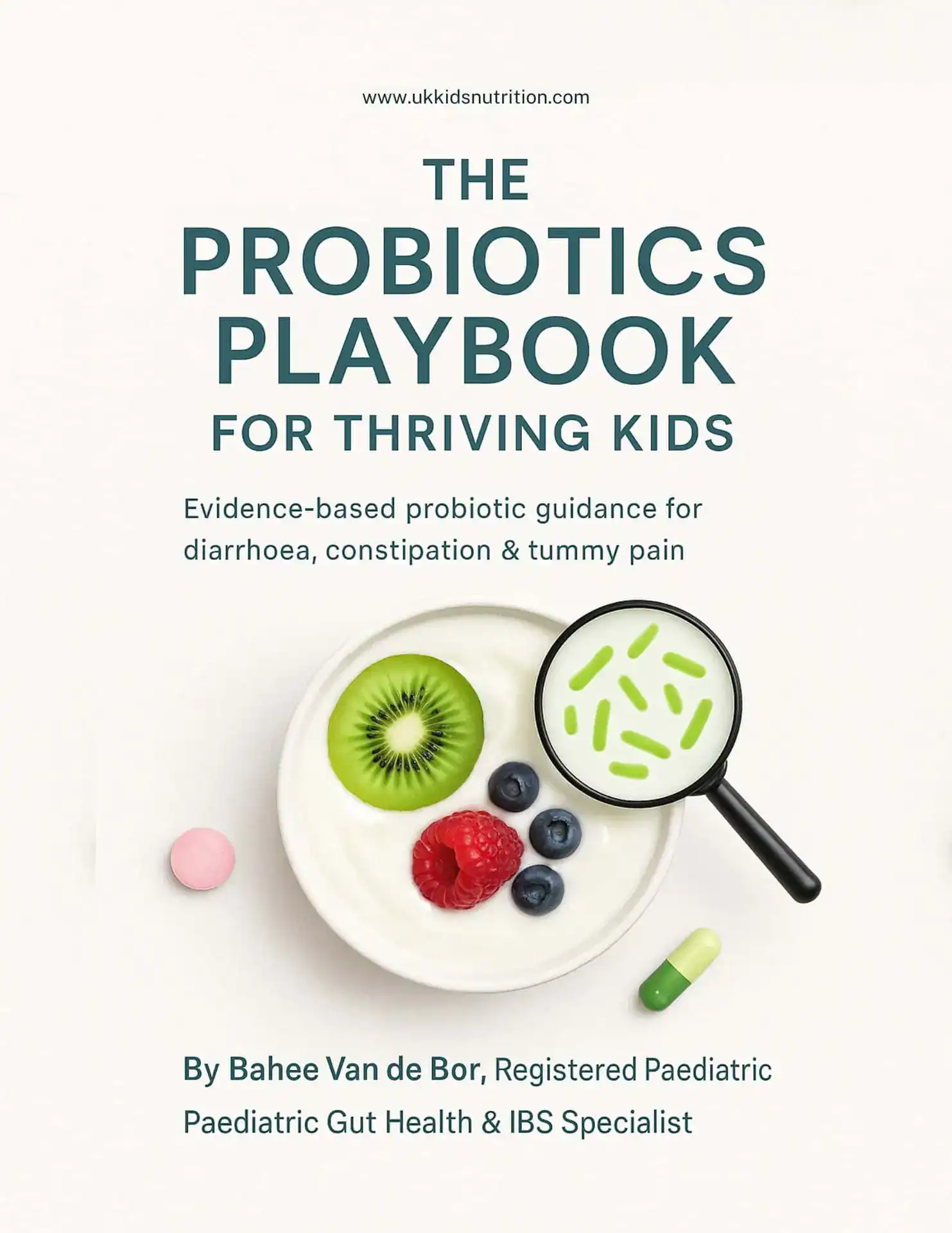
Learn more about beneficial probiotics for children with tummy troubles in the Probiotics Playbook.

What are the benefits of kefir for kids?
Once children are over one year of age, toddlers and older children can enjoy milk-based kefir made with whole milk.
Research suggests kefir may support digestion in children who struggle with lactose intolerance. The live cultures in kefir help break down lactose, which may improve tolerance in some children.
Nutritional benefits
- Bone health: A natural source of calcium, and in some products, vitamin D
- Protein: Supports growth and muscle maintenance
- Gut support: Provides a wide range of live bacterial cultures
Is kefir milk lactose-free?
Unless a product is specifically labelled as low lactose, milk-based kefir will still contain lactose.
Some children with lactose intolerance may tolerate small amounts, such as one to three tablespoons with meals. Tolerance varies depending on the child.
Water-based or dairy-free kefir does not contain lactose or cow’s milk protein, but ingredients should always be checked carefully.
Is kefir low FODMAP?
Most milk-based kefir is not low FODMAP due to its lactose content, particularly at standard serving sizes of around 200 ml.
For children who are lactose intolerant, water-based kefir may be an alternative.
It’s important to remember:
- Portion size and individual tolerance matter
- Some children with IBS may tolerate small amounts even if a food is not strictly low FODMAP
Identifying personal trigger foods helps avoid unnecessary dietary restriction.
Is kefir good for IBS?
Within my national IBS management pathway for children, fermented foods like kefir sit within Step 2: Fibre and Probiotic Optimisation. They are introduced only once the stool pattern, pain and tolerance have been properly assessed, rather than used as a first-line fix.
Because kefir is rich in probiotics, it can be a gut-friendly food for some children with IBS, constipation or diarrhoea.
If lactose sensitivity is an issue, kefir should be introduced gradually in small amounts and increased only if well tolerated.
Learn more about Happy Belly Club Programme.
Kefir and antibacterial properties
Kefir contains a specific probiotic called Lactobacillus kefiri.
This strain has been shown in research to inhibit harmful bacteria such as Salmonella, Helicobacter pylori and E. coli. Fermented dairy products like kefir and yoghurt may also reduce the growth of Bacteroides fragilis, a bacterium associated with diarrhoea and inflammatory bowel disease.
Kefir health benefits and allergies
Kefir may have wider potential benefits related to immune and inflammatory health.
Research suggests that gut dysbiosis, an imbalance in the gut microbiota, is associated with allergic and inflammatory conditions such as asthma and food allergy.
Diet plays a key role in shaping the gut microbiome, and including fermented foods like kefir as part of a varied diet may help support microbial diversity from an early age.
How much kefir should children drink?
here are no official guidelines for kefir intake.
Kefir can be offered:
- As part of breakfast
- As a snack once daily
- In small amounts with meals
It should never replace breastmilk or formula in infants under one year of age.

Examples of kefir for children
One product we regularly use is Yeo Valley Kefir Yoghurt.
We like it because:
It is low in added sugar (under 10 g per 100 g)
It contains 14 probiotic strains from the Lactobacillus and Bifidobacterium families
It comes in child-friendly flavours
It works particularly well served over breakfast cereals. because the children enjoy them.
Bottomline
Kefir can be a valuable addition to a child’s diet due to its probiotic content and nutritional profile.
If a child enjoys kefir and tolerates it well, it can be offered safely as part of a balanced diet. If not, yoghurt remains a suitable alternative, although it typically contains fewer probiotic strains.

Let Me Help
If your child is struggling with gut symptoms, here’s the best next step:
Ongoing constipation, tummy pain, bloating or IBS-type symptoms
→ Apply for the 12-week Happy Belly
A quick decision, flare-up, or you need tailored advice now
→ Book a Specialist 1:1 Consultation
Best suited for targeted questions such as kefir tolerance, probiotic selection, or short-term symptom management.


One thought on “Kefir for Kids and Toddler Gut Health: A Specialist Paediatric Dietitian’s Guide | Bahee Van de Bor”
Exactly!